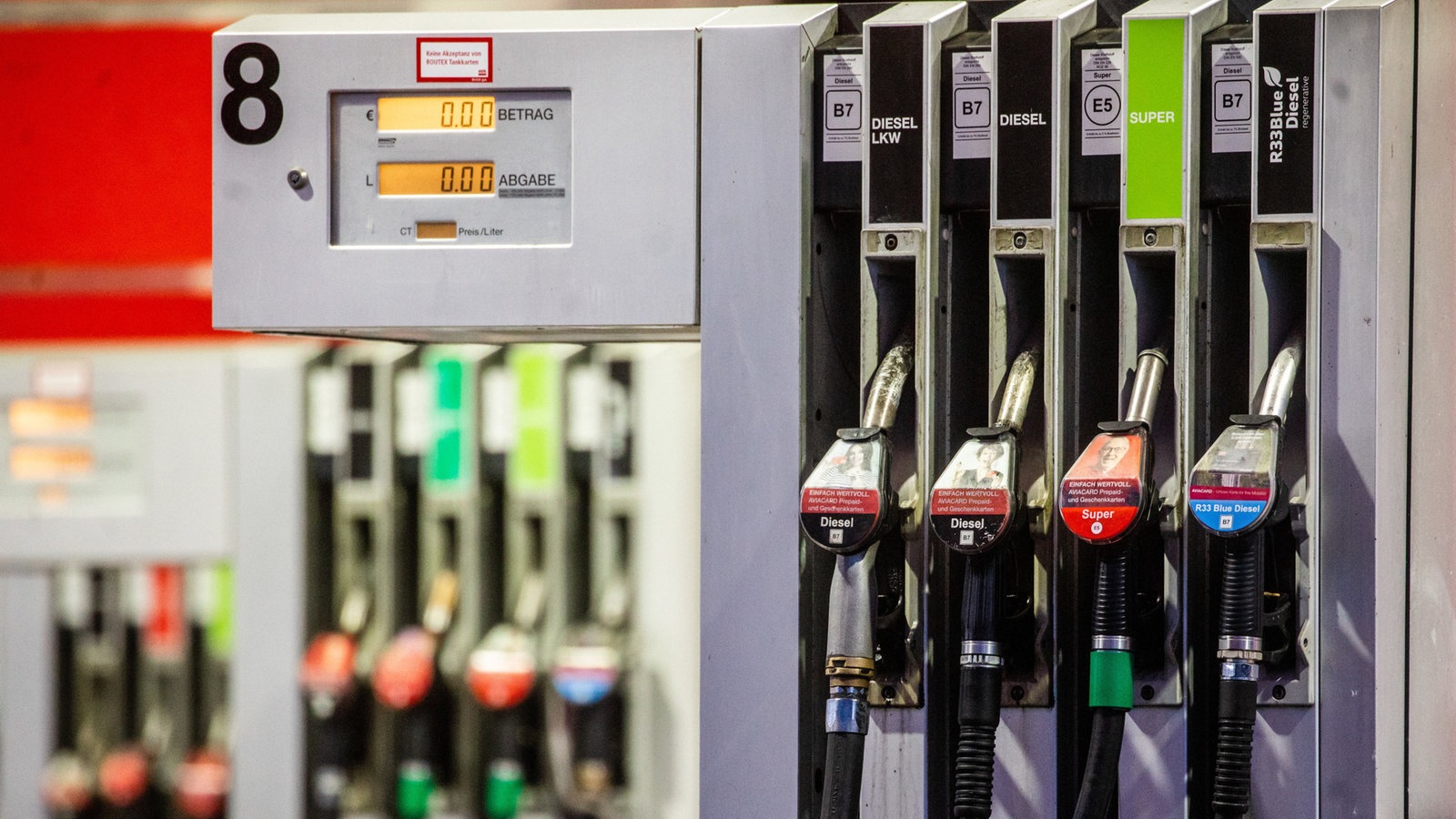
German Fuel Crisis Deepens: Cartel Office Damps Hopes for Quick Relief Amidst Iran War Fallout
Germany finds itself grappling with a severe energy crunch, as benzinpreise (gasoline prices) and diesel costs continue their relentless climb, pushed ever higher by the unfolding Iran Krieg (Iran war). The psychological two-euro-per-liter barrier has been breached for both Super E10 and diesel, igniting public outcry and sparking urgent debates about political intervention. While consumer expectations for immediate relief are high, the Bundeskartellamt (Federal Cartel Office) has issued a sober assessment, dampening hopes for a rapid solution to geopolitically driven price hikes, even as it scrutinizes potential market abuses.
The Escalating Crisis at the Pump: Iran War's Direct Impact
The scenes at German filling stations are increasingly grim for motorists. Just recently, the average price for a liter of Super E10 surpassed the €2 mark nationwide, closely followed by diesel, which has also soared past this critical threshold. This dramatic surge in German fuel prices is directly attributed to the escalating conflict in the Middle East, particularly the Iran Krieg. The Strait of Hormuz, a narrow yet critically important waterway for global oil and gas shipments off the coast of Iran, has seen heightened tensions since the recent escalation. Any disruption or perceived threat to this choke point sends immediate ripples through international energy markets, leading to significant increases in crude oil and natural gas prices.
The impact is palpable. Drivers are increasingly looking for alternatives, with some even crossing borders into neighboring countries where fuel might still be marginally cheaper. Data from the ADAC (Germany's largest automobile club) has shown dramatic daily increases, with Super E10 and diesel seeing multi-cent jumps overnight, reaching highs not seen in months, or even years. Experts like Christian Laberer, a fuel market analyst for ADAC, highlight that diesel prices react particularly sensitively to external factors like crises and wars, often experiencing more pronounced swings, both upwards and downwards. This sensitivity underscores the vulnerability of the fuel market to global geopolitical events, making the current situation regarding the benzinpreise iran krieg a critical economic challenge for German households and businesses.
Political Reactions and Warnings Against Price Gouging
The soaring fuel costs have naturally drawn the attention of German politicians, prompting calls for action and intense scrutiny of the market. Federal Minister for Economic Affairs, Katherina Reiche (CDU), has announced a thorough review by the Bundeskartellamt. "We will investigate to ensure that a situation reflected in the markets, but not to this extent, is not being exploited," Reiche stated in a podcast, confirming intensive discussions with the Cartel Office. However, she has preemptively ruled out a "Spritpreisbremse" (fuel price brake), suggesting that direct price caps are not a viable solution in this complex economic environment.
Echoing these concerns, Federal Finance Minister Lars Klingbeil (SPD) has publicly warned mineral oil companies against exploiting the current crisis. Appearing on ZDF, Klingbeil explicitly threatened consequences should companies attempt to profit excessively from the current geopolitical instability. He emphasized that "there must be no profiteering, and politics must, of course, act and proceed clearly and consistently." These ministerial statements underscore a strong political will to protect consumers from potential "Abzocke" (price gouging), even as the underlying causes of the price hikes remain largely external. For a deeper dive into the ministerial warnings and their implications, you can read our related article: Germany's Soaring Fuel Costs: Ministers Warn Against Price Gouging.
The Bundeskartellamt's Measured Response and Limitations
Amidst the escalating crisis and political pressure, the Bundeskartellamt, led by President Andreas Mundt, has provided a critical assessment that tempers expectations for immediate governmental intervention. The authority confirmed that it "continuously analyzes" fuel price developments. Mundt stated, "Should there be indications of anti-competitive behavior by mineral oil companies, we will take consistent action against it." This reassures the public that illegal cartel activities will not be tolerated. However, he also delivered a stark message regarding the limits of their power:
“There is no instrument available to prevent geopolitically driven price increases at the push of a button.”
This statement is crucial. It highlights that while the Cartel Office can investigate and penalize illegal price-fixing or market manipulation, it lacks the tools to counteract price increases that are a direct consequence of global events like the Iran Krieg and its effect on the Strait of Hormuz. Even an unusually large gap between crude oil prices and pump prices, which the office constantly monitors, doesn't automatically imply illegal behavior if it's tied to legitimate market conditions exacerbated by international crises. The office's role is primarily to ensure fair competition within the market, not to insulate consumers from global economic shocks. This distinction is vital for understanding why a quick fix for the current benzinpreise iran krieg situation is unlikely to come from regulatory bodies alone.
Navigating the Crisis: Tips for Consumers and Future Outlook
While an immediate governmental "fix" for the soaring fuel prices driven by the benzinpreise iran krieg scenario seems unlikely, consumers are not entirely powerless. Here are some practical tips to help mitigate the impact of high fuel costs:
- Drive Efficiently: Adopt a smoother driving style, avoid aggressive acceleration and braking, and maintain optimal tire pressure to significantly reduce fuel consumption.
- Compare Prices: Utilize online comparison tools and apps (like those offered by the ADAC) to find the cheapest fuel stations in your area. Prices can vary significantly even within a few kilometers.
- Time Your Refuels: Fuel prices often fluctuate throughout the day. Historically, evenings (between 6 PM and 10 PM) tend to offer slightly lower prices than mornings or midday.
- Consider Alternatives: For shorter distances, embrace public transport, cycling, or walking. Carpooling for commutes can also share the burden of fuel costs.
- Plan Trips: Combine errands into a single trip to minimize driving distances and cold starts, which consume more fuel.
Looking ahead, the ongoing fuel crisis underscores Germany's vulnerability to global energy market volatility. It fuels renewed discussions about diversifying energy sources, accelerating the transition to renewable energies, and strengthening energy security. The current situation, with German fuel prices exceeding €2, driven by the Iran War Drives German Fuel Prices Past €2: What's Next?, is not merely a temporary inconvenience but a stark reminder of the interconnectedness of geopolitics and daily economic realities.
In conclusion, the German fuel crisis, intensified by the Iran Krieg, presents a complex challenge with no easy answers. While the Bundeskartellamt diligently monitors the market for anti-competitive behavior, its mandate does not extend to curbing price hikes driven by global geopolitical events. Consumers are left to navigate these turbulent times with smart driving habits and careful planning, as policymakers grapple with long-term strategies to bolster Germany's energy resilience against future shocks.